Finding a job online can take a lot of time. There are many job boards available, but not every vacancy you find will be suitable for your experience, location, or career goals. Some listings may be outdated, while others may direct you to a company website where the position is no longer available.
The best job boards to find jobs are the ones that help you discover relevant opportunities, check when they were posted, and understand the requirements before applying. However, using a popular job board does not automatically mean that every listing is genuine or still open.
As a Job Application Specialist, I focus mainly on LinkedIn and Hiring Cafe when sourcing opportunities for my candidates. I prefer vacancies posted within the past five days and, where applicant numbers are available, I prioritize jobs with fewer than 100 applicants. I also research companies manually and check their official careers pages to verify job listings before recommending them.
This approach helps me narrow down the available opportunities instead of spending time on every vacancy that appears in a search. In this article, I will explain which job boards are worth checking, how to identify recent job postings, and why company career pages are an important part of the job search process.
Why Choosing the Right Job Board Matters
A job board can make it easier to find vacancies, but the quality of your search also depends on how you use it.
For example, searching for a job title without applying any filters may return positions that were posted several weeks ago, require more experience than you have, or are located somewhere you cannot work.
A more focused approach involves checking a few important details before applying:
- Posting date: How recently was the vacancy advertised?
- Job requirements: Do your skills, qualifications, and experience match the position?
- Applicant information: Does the listing display an applicant count or other application-related details?
- Location and work arrangement: Is the role remote, hybrid, or on-site, and are you eligible to work there?
- Company information: Can you verify the employer and vacancy through an official source?
- Application status: Is the position still accepting applications?
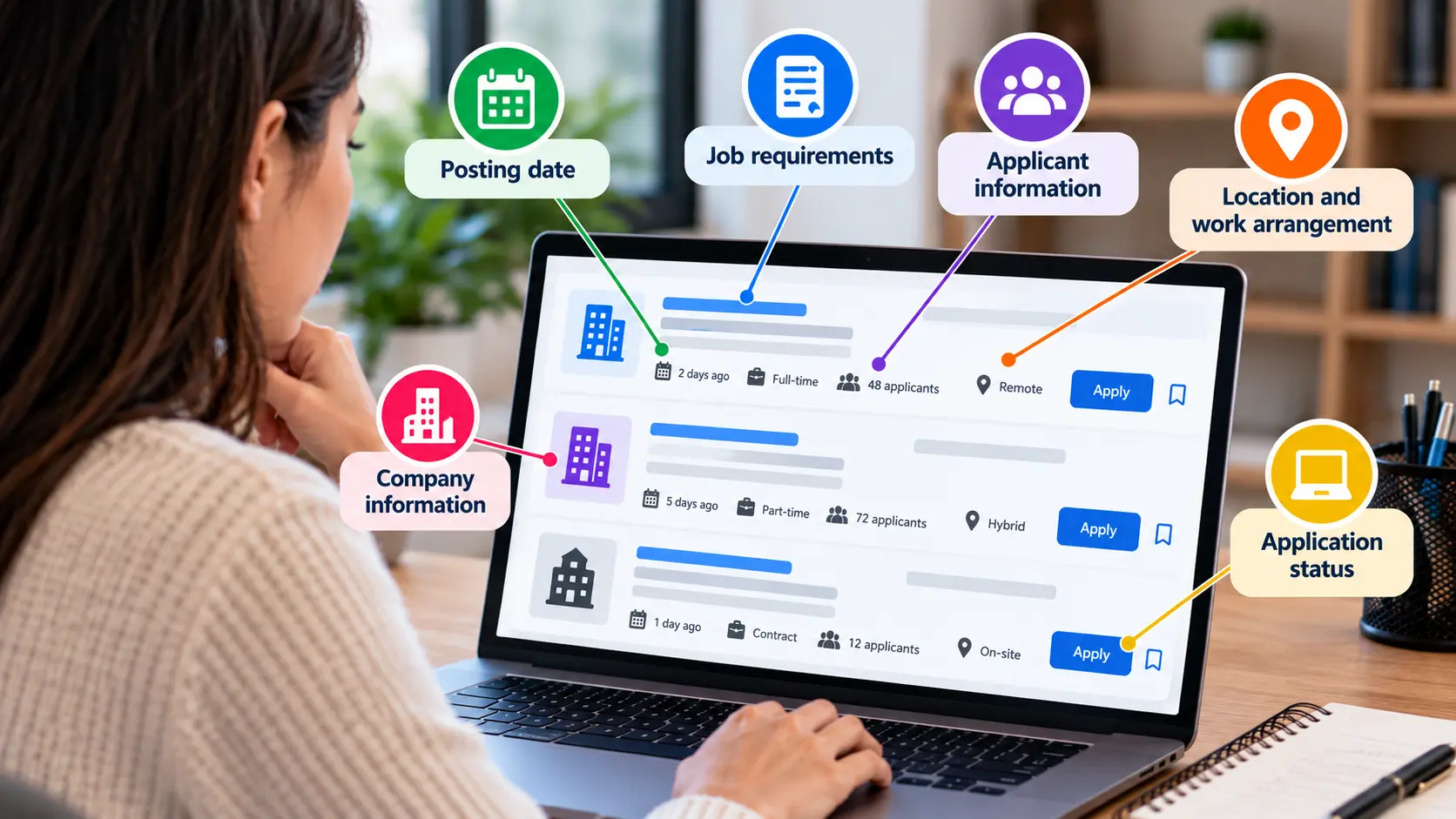
These checks help you spend more time on suitable opportunities and less time reviewing vacancies that do not meet your requirements.
1. LinkedIn Jobs: My First Choice for Job Sourcing
LinkedIn Jobs is one of the main platforms I use when searching for opportunities for my candidates. It offers job-search filters that help narrow results by location, posting date, company, experience level, and employment type.
You can visit LinkedIn Jobs to search for vacancies based on your target job title and preferred location.
Why I Use LinkedIn Jobs
One reason I focus on LinkedIn is that it allows me to refine searches instead of reviewing every available listing. I can search for specific job titles, choose relevant locations, and filter results by how recently they were posted.
LinkedIn also provides applicant-related information for some vacancies. Depending on the listing and the features available, you may see an applicant count or an option to filter for jobs with fewer than 10 applicants.
For my own job-sourcing process, I prefer opportunities with fewer than 100 applicants when the available information allows me to assess that. I also prioritize jobs posted within the past five days.
These are my personal screening preferences, not a guarantee that a job with fewer applicants will lead to an interview. Applicant counts alone do not show how qualified those applicants are, and a vacancy with more applicants may still be an excellent match.
How to Find Recent Jobs on LinkedIn
I start by searching for a specific job title rather than using a broad term.
For example, someone looking for a Data Analyst position might search for:
- Data Analyst
- Junior Data Analyst
- Reporting Analyst
- Business Intelligence Analyst
The next step is to select the appropriate location and experience level. If remote work is a priority, I also check whether the employer accepts applicants from the candidate’s country or region.
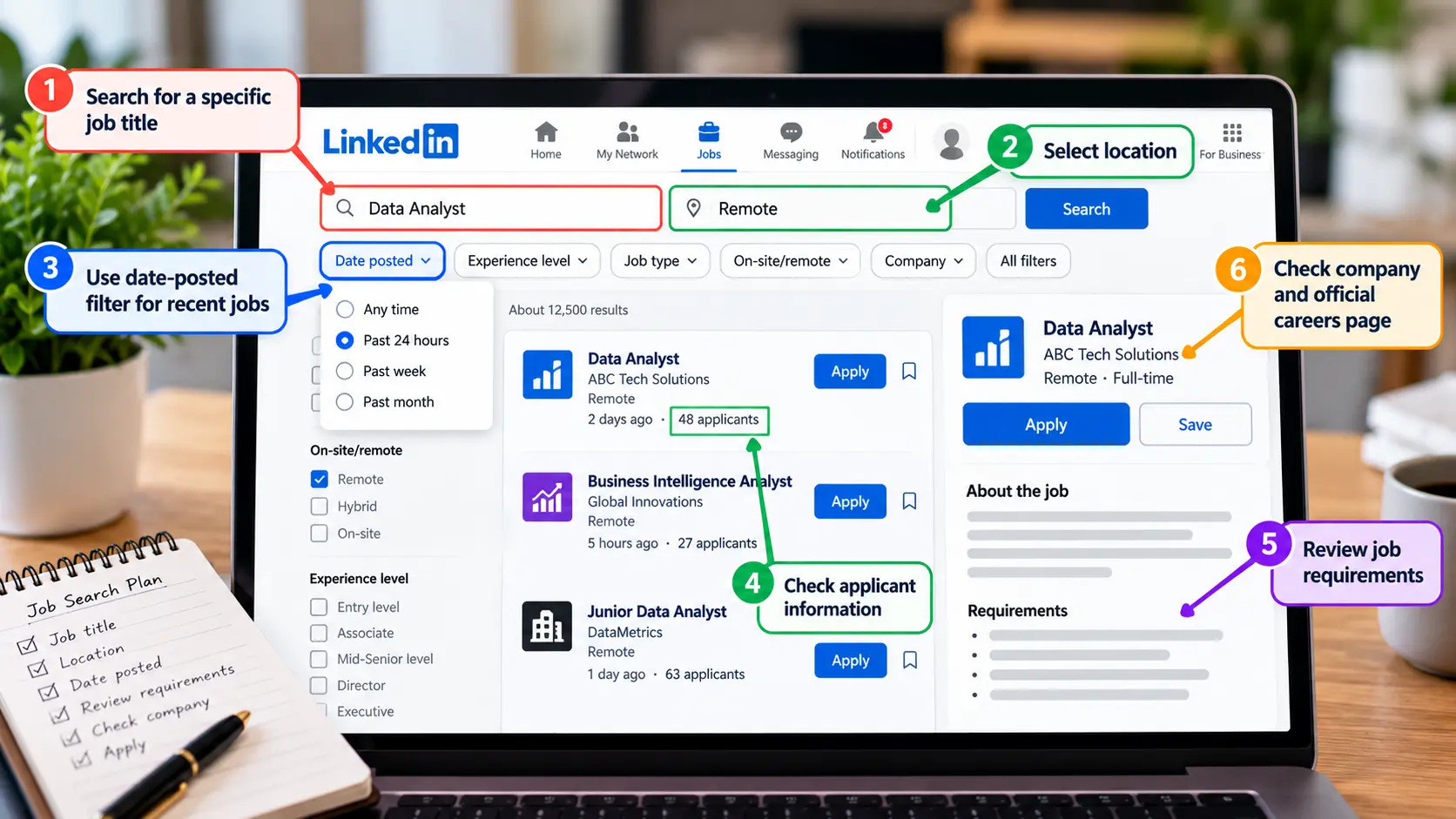
After refining the search, I use the date-posted filter to focus on recent vacancies. LinkedIn provides options such as the past 24 hours and the past week, although the filters available may vary.
When I find a suitable vacancy, I review its requirements, applicant information where available, and application link. If the position looks relevant, I check the employer’s official careers page whenever possible.
2. Hiring Cafe: Another Platform I Use to Find Relevant Jobs
Hiring Cafe is another platform I use in my job-sourcing process. It provides job-search filters that help users narrow down vacancies according to their preferences.
Visit Hiring Cafe to explore available opportunities.
Why Hiring Cafe Is Useful
I use Hiring Cafe alongside LinkedIn rather than relying on a single platform. This gives me another place to search for vacancies that fit a candidate’s job title, experience, location, and other requirements.
I particularly value the ability to narrow the search to recent postings. My preferred window is the past five days because I want to prioritize vacancies that have appeared recently rather than spending most of my time on older listings.
Applicant information is also part of my screening approach. Where a platform displays an applicant count, I use that information to help prioritize opportunities with fewer than 100 applicants.
However, the availability and meaning of applicant information can vary between platforms and individual listings. I do not treat a missing applicant count as proof that a job has too many applicants, nor do I assume that every vacancy with a low count has a better chance of success.
How I Use Hiring Cafe in My Job Search
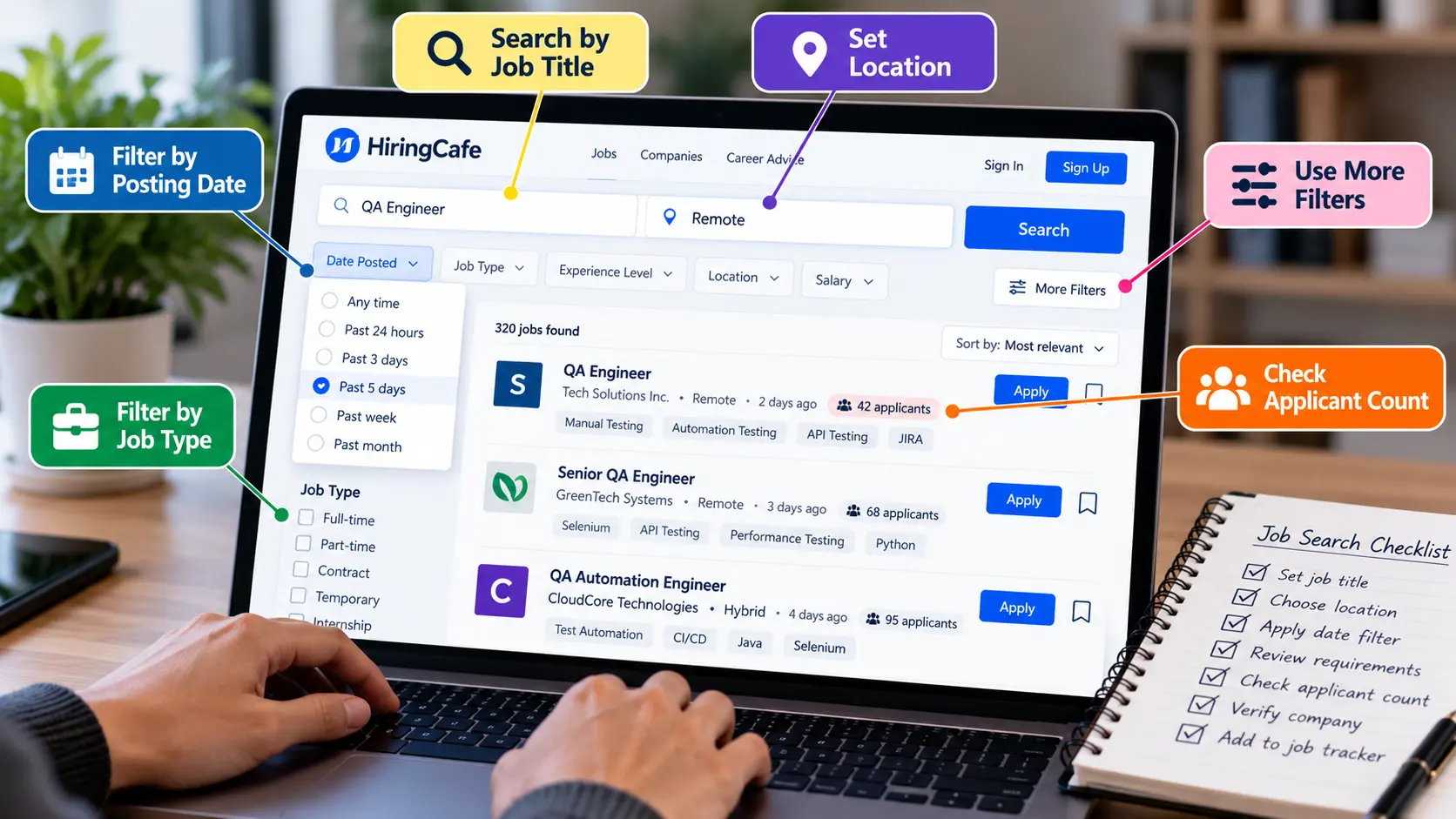
I begin with the target job title and location. From there, I refine the search using the filters that are available for the vacancy type and my candidate’s requirements.
For example, if I am sourcing remote QA Engineer positions, I look for relevant titles and check the required testing experience, technical skills, location restrictions, and work arrangement.
Once a vacancy looks promising, I read the full job description and compare it with the candidate’s resume. I also check the company behind the listing before deciding whether it should be added to the job tracker.
Using two job-search platforms helps me discover opportunities through different searches. It does not remove the need to verify each vacancy.
3. Indeed: Useful for Filtering and Discovering Vacancies
Indeed is another job board worth including in a job search. It allows users to narrow searches using filters such as date posted, salary, work setting, job type, and education level, depending on the search and location.
You can start at Indeed.
When to Use Indeed
Indeed can be useful when you want to compare vacancies across employers or search for roles that may not appear in your first LinkedIn search.
For instance, a candidate searching for administrative or customer support roles might use different job titles and filter the results by location, employment type, and date posted.
I would still review the full job description before treating a listing as a suitable opportunity. A job title may look relevant, but the actual responsibilities, required experience, salary, or working conditions may not match the candidate’s needs.
Indeed also recommends using search filters and advanced search techniques to narrow results.
Like other job boards, Indeed should be treated as a source for discovering vacancies rather than proof that every listing is current and legitimate.
4. Company Career Pages: My Preferred Way to Verify a Vacancy
Job boards are useful for discovering opportunities, but I do not rely on them alone.
As part of my manual job-sourcing process, I research companies and check their official careers pages to see whether the vacancy is listed there. This is particularly important when I find a job through a third-party platform.
A company careers page can provide information about the position, its responsibilities, location, qualifications, and application process. It may also link directly to the employer’s recruitment system.
How I Check Company Career Pages
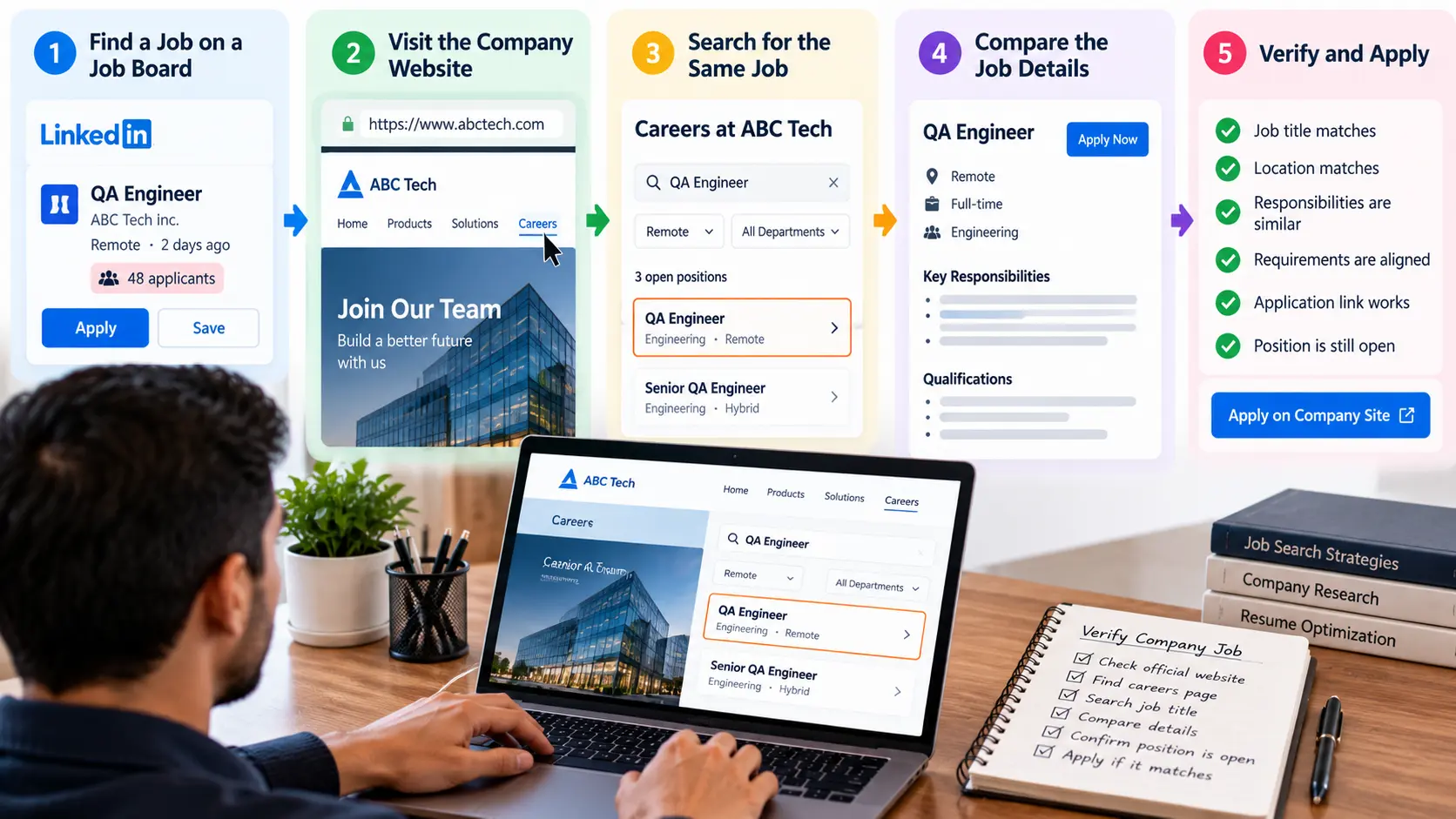
Suppose I find a remote QA Engineer vacancy on LinkedIn.
Before recommending it, I review the job description and identify the employer. I then look for the company’s official website and careers section.
If I find the same vacancy on the official careers page, I compare the title, location, responsibilities, and application requirements with the listing I originally found.
I also check whether the application link works and whether the role still appears to be open.
If the vacancy is missing from the company website, I do not automatically assume it is fake. Some employers use external recruitment agencies or third-party applicant tracking systems. In that situation, I look for other reliable evidence or contact the employer through an official channel if necessary.
This manual research helps me avoid relying entirely on a listing that may be outdated or inaccurate.
Why Company Career Pages Matter
A job board may collect listings from different sources, including employer websites and external recruitment systems. Therefore, a listing can appear on a job board even when the employer’s own application process has changed.
Checking the company’s website gives you another opportunity to verify the vacancy details. It also helps you understand the organization before submitting your application.
When possible, I prefer to apply through the employer’s official application page if it is available and the vacancy is still open.
5. How to Find Jobs Posted Within the Past Five Days
Freshness is one of the main factors in my job-sourcing strategy. I mostly focus on vacancies posted within the past five days, although I may consider an older posting if it remains relevant and the employer is still accepting applications.
A recent posting is not automatically a good match, but it helps narrow the search to opportunities that have appeared more recently.
My Five-Day Job Search Process
First, define the target role.
Identify the job titles, locations, experience levels, and work arrangements that fit the candidate’s instructions.
Second, search LinkedIn and Hiring Cafe.
Use the available date filters to find recent vacancies. Search for relevant variations of the job title rather than relying on one exact phrase.
Third, check applicant information where available.
When a listing displays applicant numbers, I prioritize jobs with fewer than 100 applicants, in line with my usual screening criteria. I do not assume that applicant numbers are available for every vacancy.
Fourth, read the complete job description.
Check the essential skills, qualifications, responsibilities, years of experience, salary information, and location requirements.
Fifth, verify the company and vacancy.
Look for the position on the official careers page or verify the application through a trustworthy employer channel.
Finally, record suitable opportunities.
I use a job tracker to record relevant vacancies, their links, posting dates, and other details needed for the application process.
This method keeps the search organized and makes it easier to review why a vacancy was selected.
6. How to Identify Real Job Postings and Avoid Expired Vacancies
No job board can guarantee that every listing is genuine, accurate, and still open. That is why checking the employer and application status is an important part of the process.
Here are some details worth checking before applying.
Verify the Employer’s Website
Look for the company’s official website and careers page. Check whether the employer’s name, job title, location, and description match the vacancy you found.
If the job is advertised through a recruitment agency, verify the agency’s identity and relationship with the employer where possible.
Check the Application Link
A legitimate-looking job description is not enough on its own. Review the destination of the application link and make sure it leads to an appropriate employer or recruitment platform.
Be cautious if a vacancy directs you to an unrelated website or asks you to pay a fee to secure a job.
Review the Posting Date
Check when the vacancy was originally posted. If the listing has been reposted, try to determine whether the employer has genuinely reopened the position or whether the date reflects a change made by the job board.
An updated listing does not necessarily mean that the employer has created a new vacancy.
Look for Signs of a Scam
Be careful with postings that request payment for employment, promise unusually high compensation without clear responsibilities, or ask for sensitive personal or financial information at an inappropriate stage of recruitment.
If something seems suspicious, verify the opportunity through an official channel before sharing information.
Confirm That the Job Is Still Open
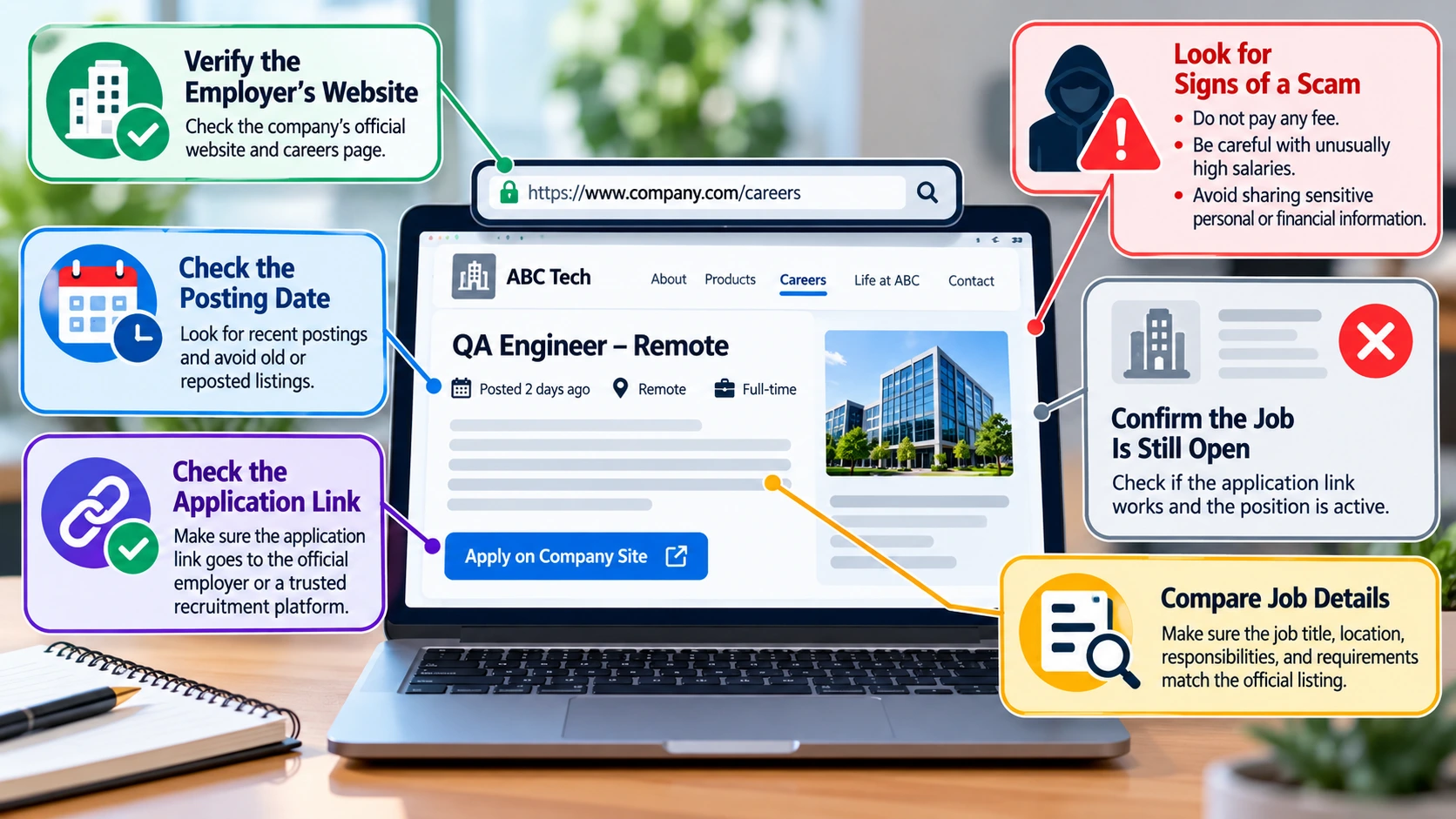
If the application link leads to an expired vacancy or the company confirms that the role has been filled, do not treat the listing as an active opportunity.
7. How to Choose the Best Job Board for Your Search
The best platform depends on the kind of job you want, the country where you plan to work, and the filters you need.
Rather than relying on a single job board, I prefer using more than one source and then checking the employer directly.
For Recent Vacancies
LinkedIn and Hiring Cafe are the two platforms I focus on most in my own workflow. Their search features help me narrow down opportunities, and I prioritize recent postings.
For Additional Job Opportunities
Indeed can provide another source of vacancies and offers filters for date posted, work setting, salary, and job type.
For Verification
The company’s official careers page is an important place to confirm vacancy details and find the correct application link.
For Better Job Matching
The platform is only one part of the process. I also compare the vacancy with the candidate’s resume, experience, skills, and target criteria before prioritizing it.
A job board may help you discover a vacancy, but the full job description determines whether it is relevant to your background.
Final Thoughts
Finding the right job board is only the first step in a focused job search. The next step is knowing how to filter vacancies, assess their requirements, and verify that the opportunities are worth pursuing.
As a Job Application Specialist, I mostly use LinkedIn and Hiring Cafe when sourcing jobs for my candidates. I generally prioritize vacancies posted within the past five days and, when applicant numbers are available, give preference to listings with fewer than 100 applicants.
I also research companies manually and check their official careers pages to verify job details and application links.
These are my practical job-sourcing preferences rather than guarantees of interview success. A recent vacancy with fewer applicants may still be unsuitable if the candidate does not meet the essential requirements.
The goal is to find relevant, current opportunities and make informed decisions before applying. Combining job boards with careful research of company websites makes the process more structured and helps reduce time spent on unsuitable or expired listings.